
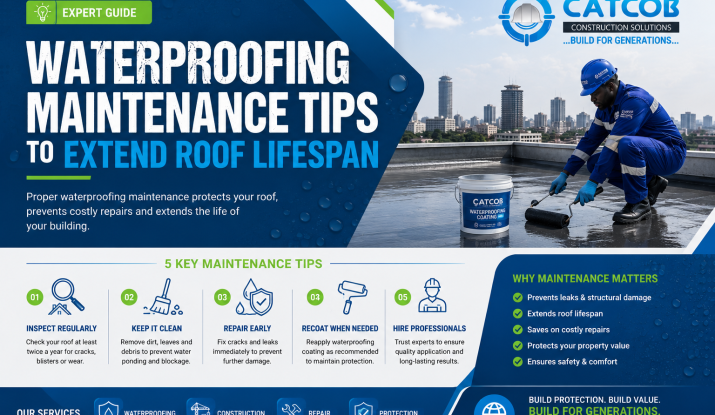
Even the best-installed waterproofing system has a finite lifespan — but that lifespan can vary enormously depending on how well the system is maintained. Two identical roofs, waterproofed with the same product on the same day, can perform completely differently after ten years purely based on the maintenance routine each one received. This guide covers the specific, practical steps that genuinely extend the working life of your roof’s waterproofing system.
Why Maintenance Matters More Than Most People Realise
Waterproofing failure rarely happens overnight — it’s typically the end result of small, gradually accumulating issues: a slowly cracking joint, a partially blocked drain, a minor puncture from fallen debris. Left unaddressed, each of these small issues compounds over time, eventually leading to a failure that could have been prevented with a fraction of the eventual repair cost through simple, regular attention.
A Practical Roof Maintenance Schedule
Twice-Yearly Professional Inspections
Schedule a thorough inspection before the long rains and again afterward, checking for any new cracking, blistering, or lifting in the membrane, ponding water that persists more than 48 hours after rainfall, and the condition of flashing, joints, and penetrations. Catching issues at this stage, before the next major rain event, is dramatically cheaper than emergency repairs during an active leak.
Quarterly Drainage Clearing
Clear gutters, downpipes, and roof drains of leaves, dust, and debris at least every three months, or more frequently if your property is near trees. Blocked drainage is one of the most common, entirely preventable causes of accelerated waterproofing failure — see our guide on the common causes of roof leaks for more detail on why this matters so much.
Immediate Attention to Small Cracks
Don’t wait for a scheduled inspection if you notice a new crack or damaged area — address it promptly, since small issues escalate quickly under continued exposure to water and thermal movement. Our guide on repairing roof cracks before they become major problems covers the correct approach.
Post-Storm Checks
After any unusually severe storm or hailstorm, conduct an additional inspection specifically looking for impact damage, debris accumulation, or any signs of new ponding that wasn’t previously present.
Product-Specific Maintenance Considerations
APP Bituminous Membranes
Check seam integrity periodically, since these represent the most common failure point in an otherwise sound membrane; see our guide on APP bituminous membranes for more on typical failure patterns to watch for.
Liquid and Acrylic Coatings
Acrylic coatings typically require periodic recoating every 5–8 years to maintain full protection, making a planned recoating schedule more cost-effective than waiting for visible failure.
Polyurethane Systems
While generally more durable, polyurethane systems on high-traffic terraces should be checked for wear at points of concentrated foot traffic or furniture placement.
Avoiding Damage From Roof Usage
- Avoid unnecessary foot traffic on roofs not designed for regular access, since even careful walking can gradually wear or puncture some membrane types
- Use protective mats or boards if maintenance work requires walking across a waterproofed surface
- Avoid dragging heavy equipment or furniture across a membrane surface without protective padding underneath
- Keep sharp objects, tools, and construction debris off waterproofed roofs and terraces
Signs That Indicate Maintenance Isn’t Enough — Full Recoat Needed
While regular maintenance extends a waterproofing system’s life considerably, every system eventually reaches the end of its effective service life. Signs that a full recoat or replacement is needed, rather than continued spot maintenance, include widespread cracking or blistering across large areas of the roof, repeat leaks appearing in different locations despite previous repairs, and visible thinning or chalking of the coating surface, indicating the material itself has degraded beyond effective repair.
Keeping Maintenance Records
Maintaining a simple record of inspection dates, any repairs carried out, and the products used provides valuable reference for future maintenance decisions and, as covered in our guide on how waterproofing increases property value, can also serve as useful documentation for a future property sale.
Building a Maintenance Budget
Rather than treating waterproofing maintenance as an unplanned, reactive expense, budgeting a modest annual allowance for inspections and minor repairs typically proves far more cost-effective than the eventual bill for a major, neglected failure. This is especially relevant for larger commercial and industrial properties, where our guides on commercial and industrial waterproofing both emphasise the value of planned, scheduled maintenance programmes.
Frequently Asked Questions
How much can proper maintenance actually extend a roof’s lifespan?
Well-maintained waterproofing systems can often exceed their expected service life by several years compared to poorly maintained equivalents, while neglected systems frequently fail well ahead of schedule.
Can I carry out roof maintenance myself?
Basic tasks like clearing debris from drains and visual inspection can often be done by property owners, but any identified cracking, blistering, or other damage should be assessed and repaired by a qualified professional.
How much does routine waterproofing maintenance typically cost?
Costs are modest compared to major repairs, typically covering an inspection visit and any minor sealant or patch work identified — a small investment relative to the cost of a full roof recoat or structural repair.
Final Thoughts
A well-maintained waterproofing system can dramatically outlast a neglected one installed with the exact same materials. Contact Catcob Construction Solutions to set up a professional maintenance schedule that protects your roof for years to come.
This article was researched, written, and optimised by Onyonka J.M., a Top SEO specialist and digital content strategist with expertise in the East African market; developing high-quality, search-driven editorial content that enhances online visibility and supports the growth of organisations and industry partners across Kenya and Africa. Learn more about the author.