
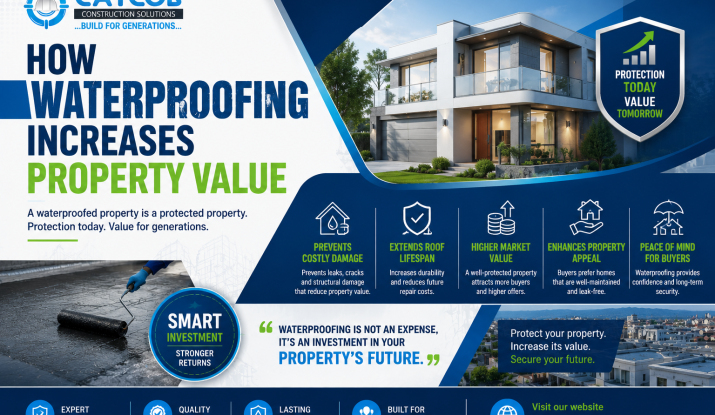
When property owners think about improvements that increase resale value, waterproofing rarely tops the list — it’s invisible once complete, unlike a renovated kitchen or a fresh coat of paint. Yet experienced property valuers, real estate agents, and buyers in Kenya’s increasingly informed market are paying closer attention to a building’s water protection history, and for good reason: water damage is one of the most expensive, structurally significant problems a property can carry.
Why Waterproofing Matters to Property Value
A property’s value ultimately reflects its condition, remaining useful life, and the buyer’s confidence that they won’t face unexpected major repair costs shortly after purchase. Water damage — visible or hidden — directly undermines all three of these factors, since it threatens structural integrity, shortens the effective lifespan of finishes and fittings, and represents exactly the kind of unpredictable, expensive surprise that makes buyers nervous or push for a lower offer.
How Poor Waterproofing Actively Destroys Value
- Structural steel reinforcement corrosion from persistent water ingress weakens the building over time, a defect that’s expensive and disruptive to properly repair
- Mould and mildew growth, beyond damaging finishes, raises genuine health and habitability concerns that deter buyers
- Visible damp patches, peeling paint, and efflorescence create an immediate negative first impression during property viewings, regardless of the underlying severity
- A history of water damage — even if since repaired — can prompt more cautious buyers to commission additional structural surveys, slowing down a sale and creating room for price renegotiation
How Proper Waterproofing Protects and Adds Value
Preserves Structural Integrity
A building genuinely protected from water intrusion maintains its structural soundness far longer, directly supporting long-term value retention rather than gradual, hidden deterioration.
Reduces Buyer Uncertainty
Being able to demonstrate documented, professional waterproofing — particularly for higher-risk areas like roofs, basements, and bathrooms — gives buyers genuine confidence and can meaningfully speed up the sale process.
Extends the Lifespan of Finishes and Fittings
Properly waterproofed bathrooms, roofs, and walls protect the expensive finishes built on top of them — tiling, paint, flooring — meaning these elements retain their appearance and function for longer, directly supporting the property’s presentable condition.
Prevents Costly Surprises During Due Diligence
Commercial and larger residential transactions in Kenya increasingly involve structural surveys or due diligence inspections; a property with a clean bill of health on water intrusion avoids the awkward, value-eroding conversations that arise when a survey uncovers hidden damage.
Waterproofing as an Investment, Not Just an Expense
It’s worth reframing how waterproofing costs are viewed. Rather than a pure expense with no visible return, properly executed waterproofing functions as a form of asset protection — preserving the underlying value of the structure itself, much like regular maintenance protects the value of a vehicle. Our guide on waterproofing solutions pricing in Nairobi puts these costs in context against the far larger expense of remedial structural repairs after neglected water damage.
Which Waterproofing Investments Matter Most for Resale
If prioritisation is necessary, roof waterproofing typically offers the strongest value protection given the scale of potential damage from a failed roof, followed closely by bathroom and wet area waterproofing given how directly visible any failure becomes to a prospective buyer during a viewing. For properties with basements, ensuring this space is genuinely dry — see our guide on basement waterproofing solutions in Kenya — also carries significant weight, since basement dampness is a well-known red flag for cautious buyers.
Documenting Waterproofing Work for Future Sale
Keeping records of waterproofing work completed — including the systems used, dates of application, and any warranty documentation — provides valuable evidence for future buyers or valuers, turning an otherwise invisible improvement into a demonstrable, credible asset during a sale process.
Commercial Property Considerations
For commercial and rental properties, proper waterproofing carries an additional value dimension: it protects rental income continuity by avoiding tenant disputes, vacancy periods during repairs, and potential liability claims related to water damage — all factors that directly affect a commercial property’s income-based valuation.
Frequently Asked Questions
Does waterproofing genuinely increase a sale price, or just prevent value loss?
In most cases, proper waterproofing functions primarily as value protection — preventing the significant value loss associated with water damage — though demonstrable, well-documented waterproofing can also give buyers added confidence that supports a stronger asking price.
Should I waterproof before listing a property for sale?
If there are known or suspected water intrusion issues, addressing them before listing generally leads to a smoother sale process and avoids last-minute price renegotiation once a buyer’s survey identifies the problem.
Do buyers really check for water damage in Kenya?
Increasingly yes, particularly for larger residential and commercial transactions where structural surveys or professional inspections are becoming more common practice.
Final Thoughts
Waterproofing may be invisible once complete, but its impact on a property’s structural integrity, presentability, and long-term value is anything but small. Contact Catcob Construction Solutions to protect and enhance the value of your property with professional waterproofing.
This article was researched, written, and optimised by Onyonka J.M., a Top SEO specialist and digital content strategist with expertise in the East African market; developing high-quality, search-driven editorial content that enhances online visibility and supports the growth of organisations and industry partners across Kenya and Africa. Learn more about the author.